
Editorial·KOUM Editorial · Exhibition
What Travels with Korean Art?
Notes from Cambridge, on a lecture by You Hong-june
A white porcelain bottle appeared on the screen near the end of You Hong-june's lecture at Cambridge.
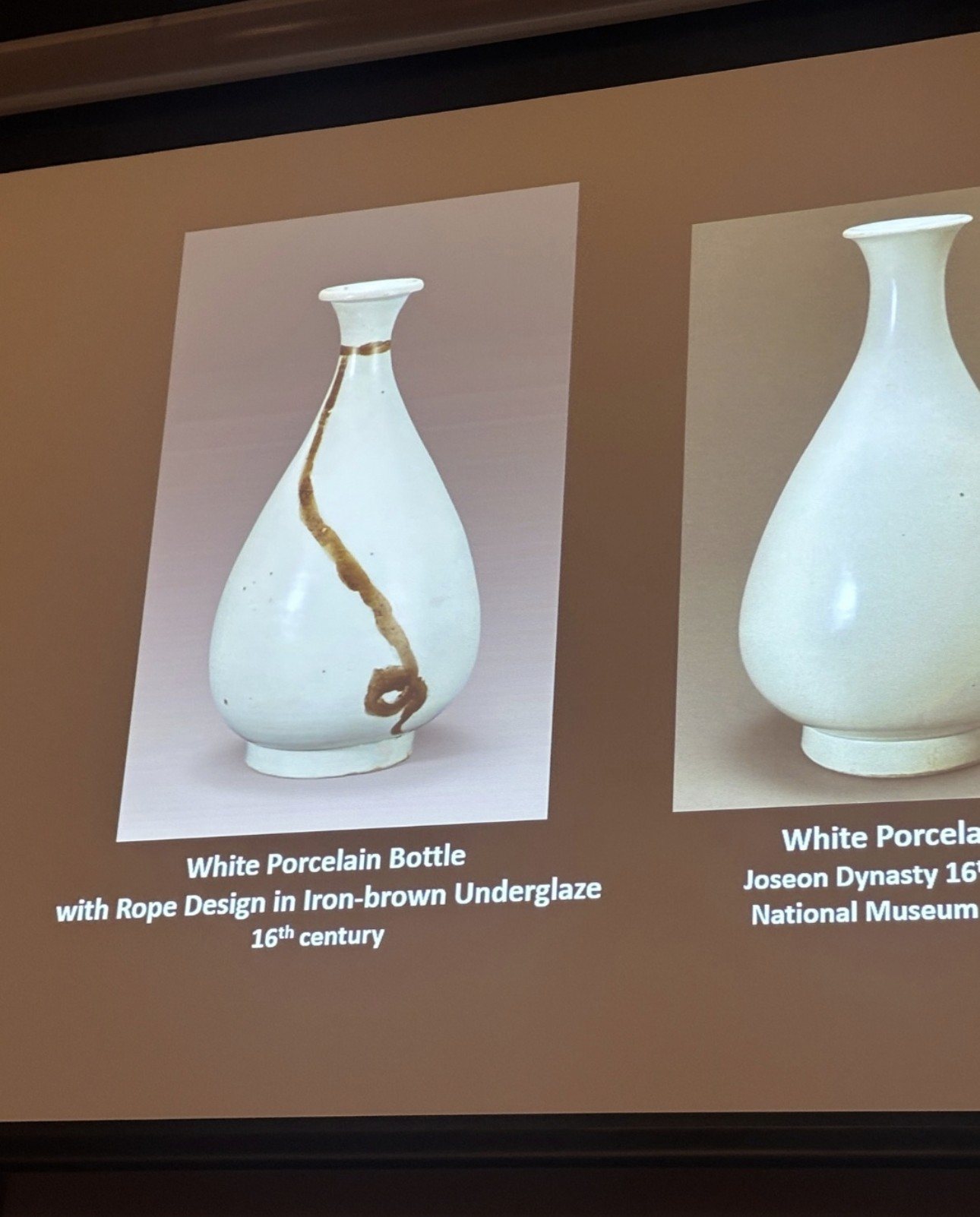
I recognised it immediately.
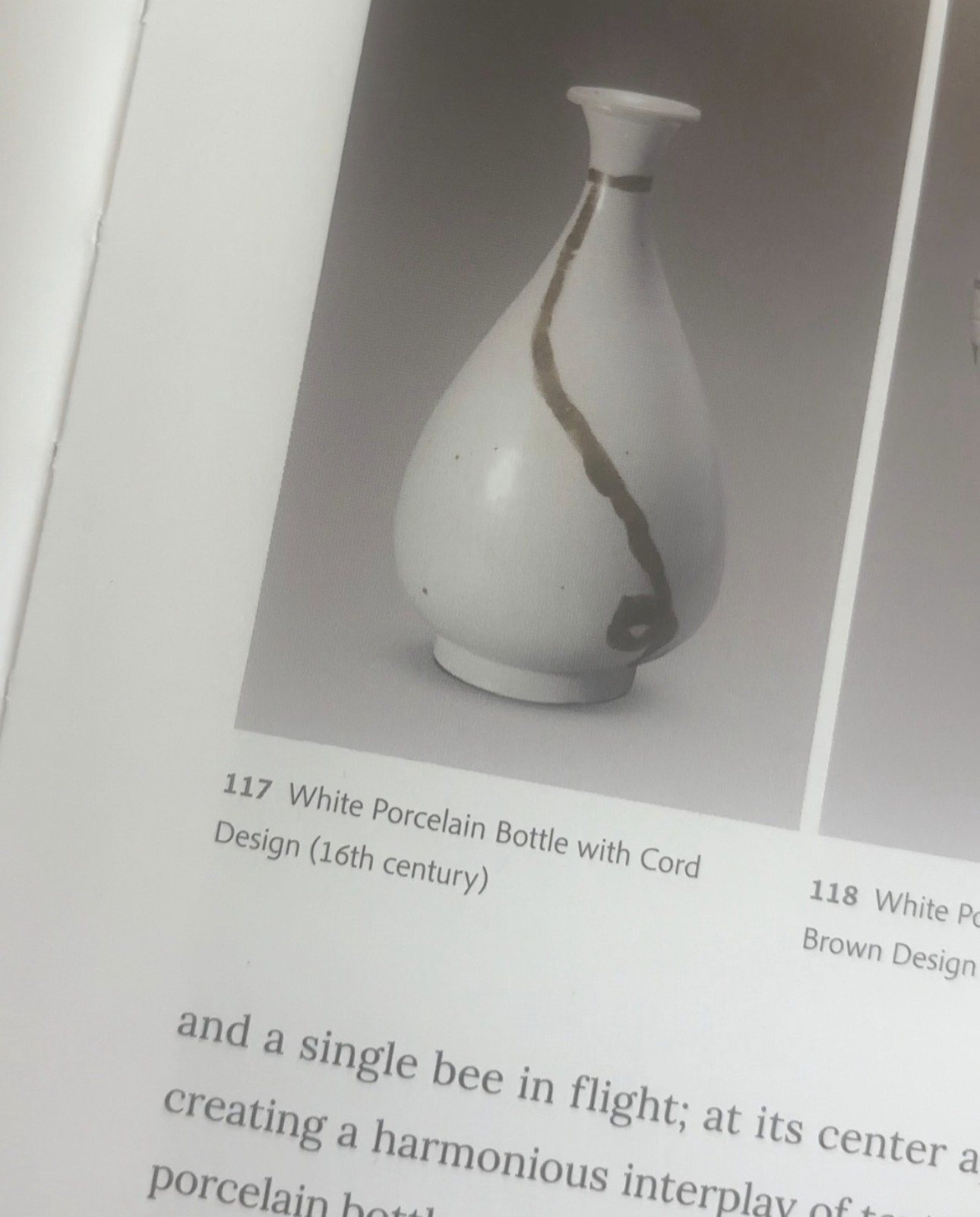
Made in the sixteenth century, the bottle is almost bare. Its white body swells gently beneath a narrow neck, while a single line painted in iron-brown begins at the neck and travels down the vessel without behaving quite as decoration should. It bends, loosens and curls. Beside it on the screen stood another white porcelain jar, undecorated and similarly restrained.
I had been looking at the first bottle since July. That summer, while discussing possible new work with the Korean painter Park Kyoung Mug, I had introduced this bottle as a point of departure. By the time I saw it projected in Cambridge, Park had already responded to it in painting.
The coincidence was small, but it sharpened a question I had been considering throughout the lecture: how does Korean art become legible outside Korea?
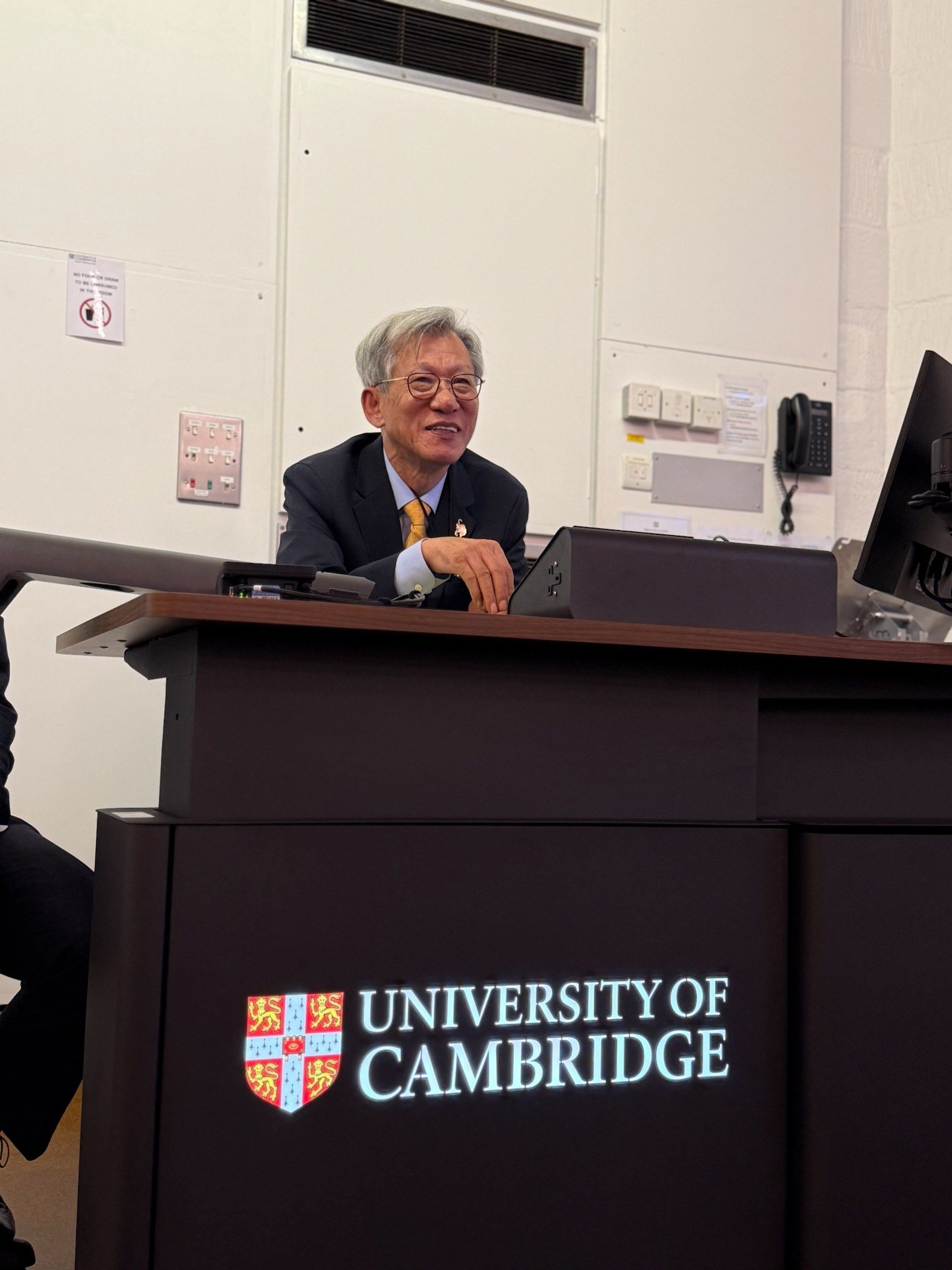
On 29 September 2026, You Hong-june, Director of the National Museum of Korea, spoke at the University of Cambridge on Ancient Korean Culture and Architecture. The lecture formed part of the Ra Jong-Yil Forum in Korean Studies and came immediately before the opening of the British Museum's major exhibition Korea.
The timing matters. Korean art has rarely been so visible abroad. But visibility and legibility are not the same thing. An object can travel much more easily than the histories necessary to understand it.
The lecture began far from the bottle, moving from prehistory through Goguryeo tomb painting, the gold of Silla, Buddhist sculpture, Seokguram and Bulguksa. It was more ambitious than a compressed chronology. Again and again, comparison did the work. Buddhist sculpture was set in a wider Asian context; pagodas were compared across regions; architecture was shown in relation to mountain, approach and view. Gradually, the lecture began to propose not simply what Korean art looks like, but how one might look at it.
At one point the screen cleared of images, leaving a passage from the Samguk Sagi, written of the new palace built in the fifteenth year of King Onjo's reign, in 4 BCE: geom-i-bullu, hwa-i-bulchi (검이불루 화이불치), given on the slide as "humble yet not undignified; splendid yet not extravagant."
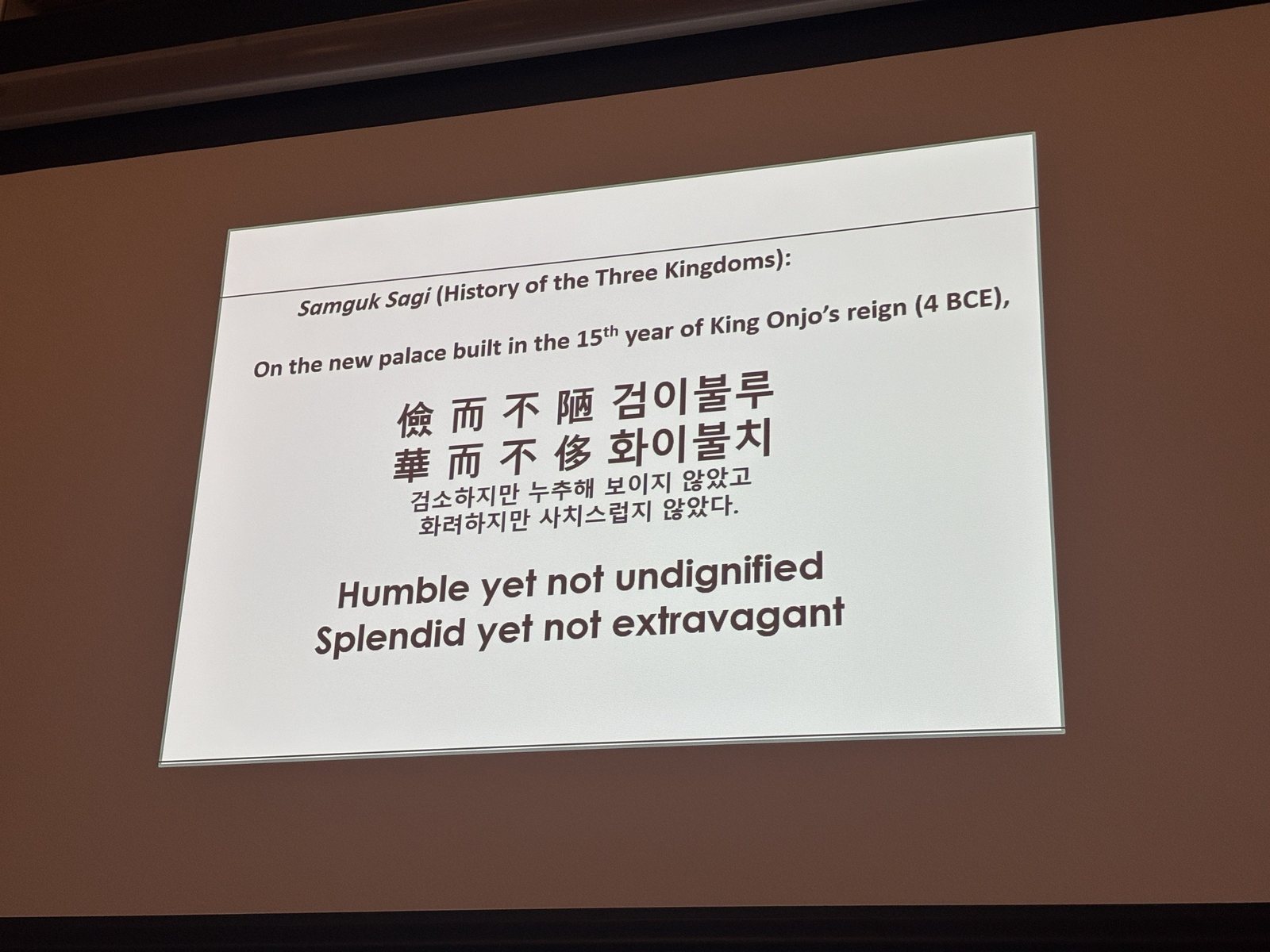
The phrase is frequently invoked in discussions of Korean aesthetics, and any attempt to make two millennia of art conform to a single principle would inevitably flatten its differences. But in the structure of the lecture, it functioned less as a definition than as a lens. From then on, I began to notice restraint, irregularity and the relationship between objects and their surroundings recurring across very different periods and materials.
By the time the lecture arrived at Joseon ceramics, these ideas had acquired material form. Some white porcelain vessels carried blue-and-white decoration; others were almost bare. Placed side by side, they showed difference in proportion, surface and line as much as in iconography.
And then came the bottle I knew. Its iron-brown line seems almost too free for the disciplined white body that carries it. It wanders. The effect is neither austerity nor ornament in the conventional sense. The bottle holds both. That tension was what had interested me when I first brought the object into conversation with Park Kyoung Mug.
Park has worked with ink and hanji for many years. In his recent work he has brought slip, the liquid clay used in ceramics, into painting, and the bottle offered a particular possibility: a ceramic object approached through a material that belongs to ceramics itself. His painting does not attempt to reconstruct the bottle. Built up in slip and acrylic on hanji, the vessel seems to lose its solidity. Ceramic has become painting; a vessel has become an image of a vessel. Slip, which once belonged to the making of the object, has crossed into its representation.
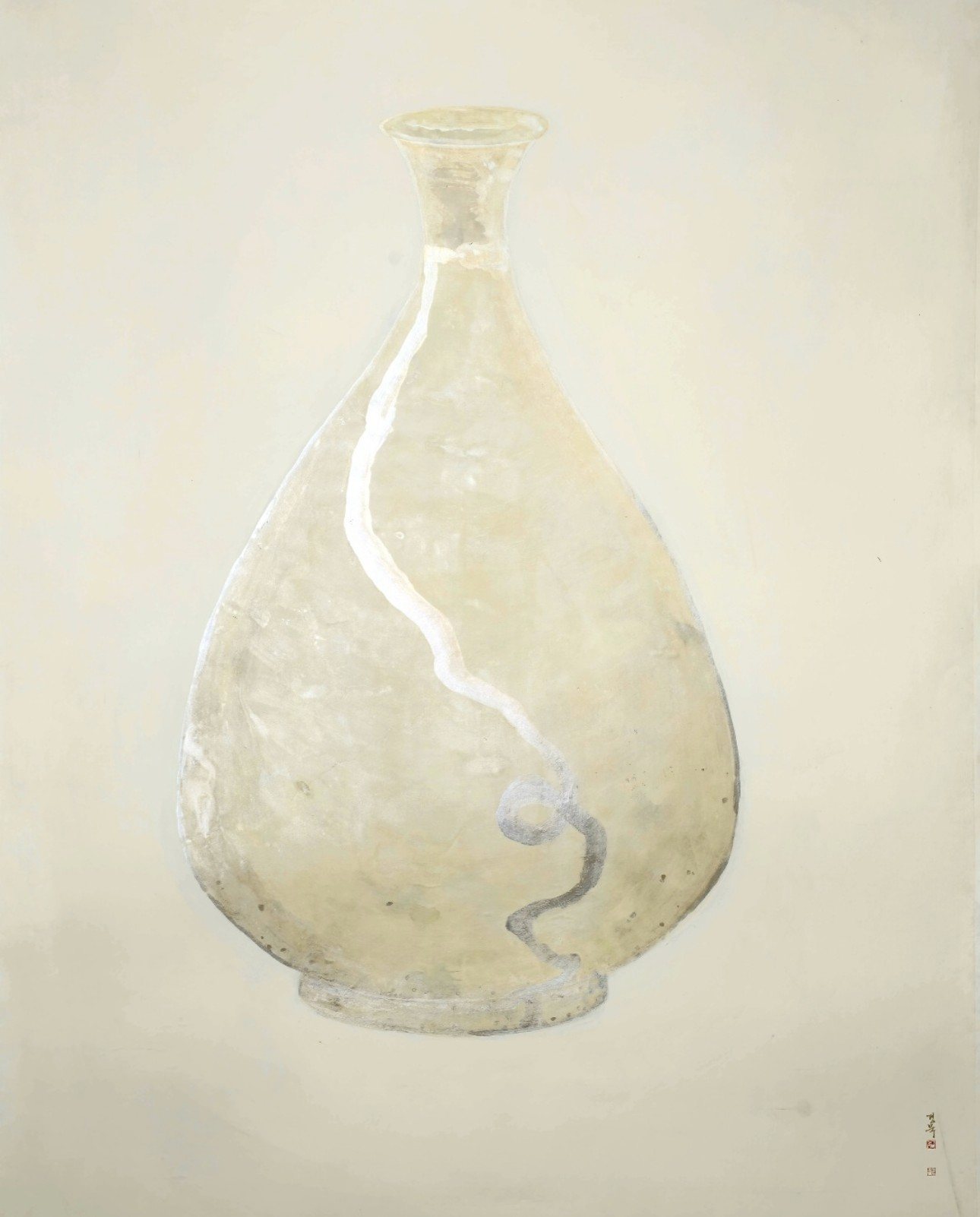
I had not expected to encounter the bottle again in Cambridge. The same historical object had entered two very different contemporary acts of interpretation. On the lecture screen, it took its place in a history of Korean aesthetics told to an international audience. In Park's studio, it had become a point of departure for a new painting. The bottle could sustain both.
The same logic of selection runs through You Hong-june's A Short History of Korean Art, published in English by the National Museum of Korea. At just over a hundred pages, it attempts an almost impossible compression, from prehistory to Joseon, ending with the characteristics and identity of Korean aesthetics.
A short history is necessarily an argument. To compress centuries is to decide which objects will carry more than their own histories, and which words will make them intelligible. The same is true of an exhibition. And of a lecture.
I had recently encountered the inverse of this problem. At the Museum of Asian Art in Corfu, researching the Manos Collection, I had been thinking about what happens when Korean objects are held in a collection but Korea is not named among its categories. Objects can survive movement remarkably well. Their classifications, histories and cultural distinctions are more vulnerable.
Cambridge presented the other side of that problem. Here, Korean art was being actively made legible. A pagoda, a Buddha, a temple or a porcelain bottle was not simply displayed as evidence of a civilisation. Each became part of an argument about how to look.
Visibility can bring an object into the room. It cannot determine what happens once it gets there.
I left Cambridge with a copy of A Short History of Korean Art, signed by You Hong-june. Looking through it afterwards, I kept returning to the problem contained in its title. The difficult word is perhaps not Korean, or even art. It is short. Shortening a history does not simply make it smaller. It reveals what someone believes cannot be left out.
The white porcelain bottle was one of those choices, on the lecture screen and in the book. I had first encountered it as a historical object, then brought it into a conversation with a living artist. In Cambridge I met it again, doing something different: helping to explain Korean art to a room in Britain.
When Korean art travels, the question is not only where it goes. It is what travels with it.
Woori Ko · KOUM Partners · London