
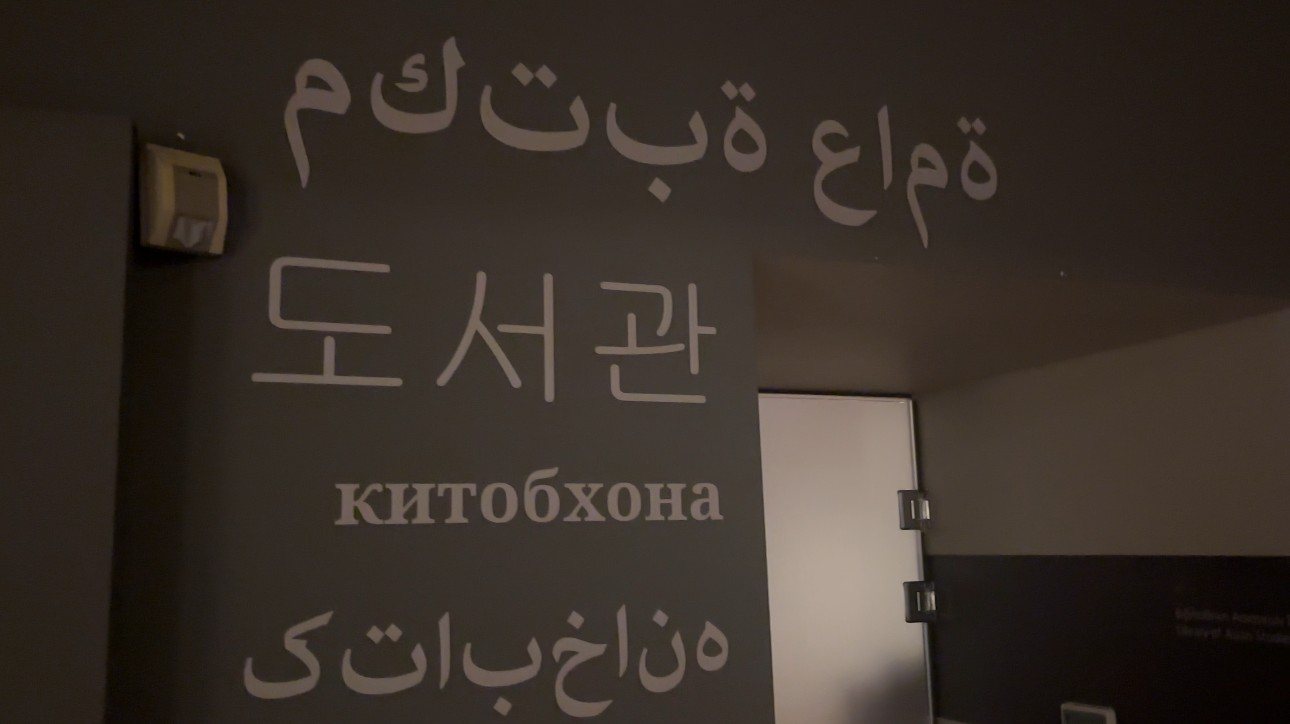
Korea is difficult to find at the Museum of Asian Art in Corfu. During a visit in September 2026, no Korean work could be found on display, and Korea does not appear among the four collections through which the museum currently organises its holdings: Chinese; Japanese; Nepal, Tibet and South-East Asia; and the nomadic art of Central Asia. The only Korean found on a wall was a single word, 도서관, one of several scripts lettered beside the museum's library. This would be unremarkable were Korean art absent from the collection. It is not.
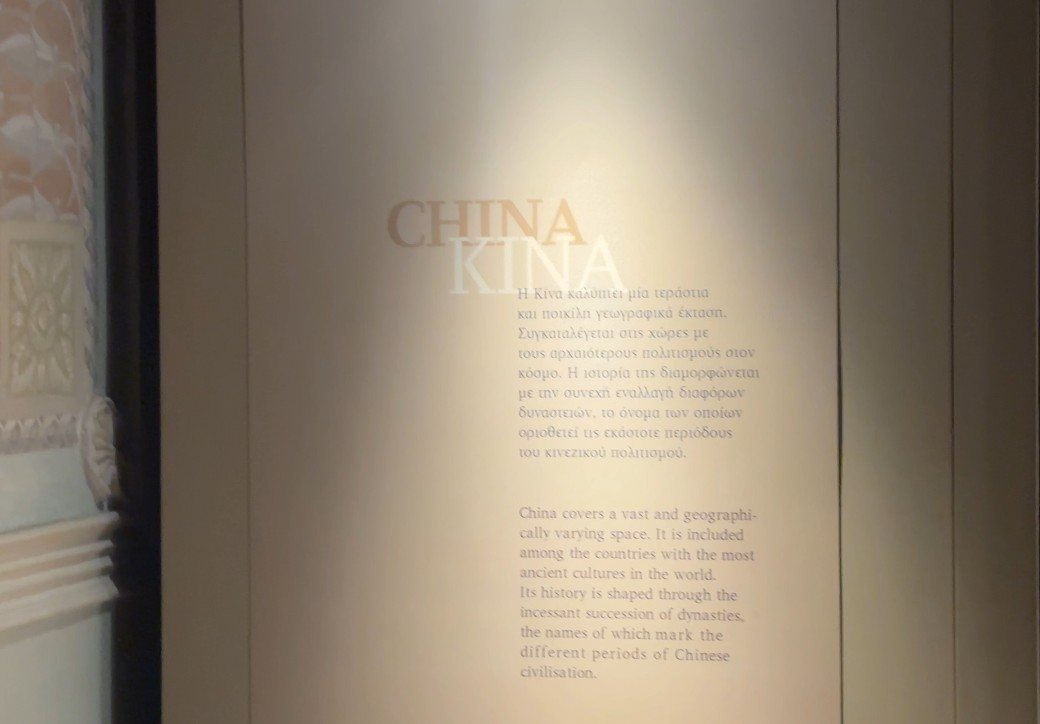
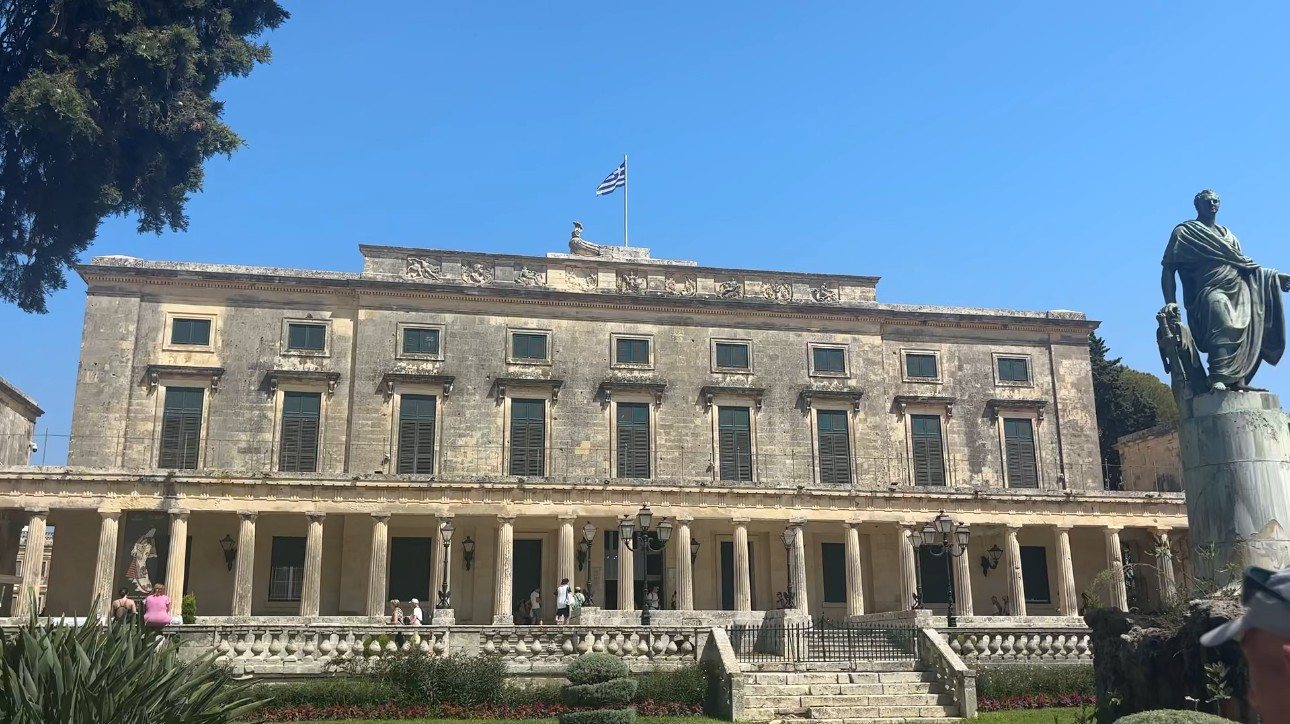
The museum describes its founding collection, assembled by the Greek diplomat Gregorios Manos, as including Chinese, Korean and Japanese art. Yet the institution opened in February 1928 as the Museum of Sino-Japanese Art, in a building made for another purpose: the Palace of St Michael and St George, built by the British between 1818 and 1823, when the Ionian Islands were under British protection. Korean objects were present at the museum's foundation. Korea was not present in its name. The discrepancy raises a more interesting question than whether Korea was simply overlooked: how can a culture be present in a collection without becoming legible as a category within it?
Manos served at the Greek embassy in Vienna from 1877 and as ambassador to Austria from 1900 to 1910. From the 1890s he bought at auction in Vienna and Paris, continuing to collect in Paris after his retirement. By the end of his life, the collection numbered almost 9,500 objects. The museum's director, Despina Zernioti, has situated his collecting within Japonisme, the European enthusiasm for Japanese art that shaped the market in which he was buying, and recent doctoral research describes him acting at public auction as both buyer and consignor.
In 1919, Manos offered his collection to the Greek state in exchange for the establishment of a museum in Corfu and a small monthly pension. According to Zernioti, he declined an approach from France. He became the museum's first curator and died in 1928, four months after it opened.
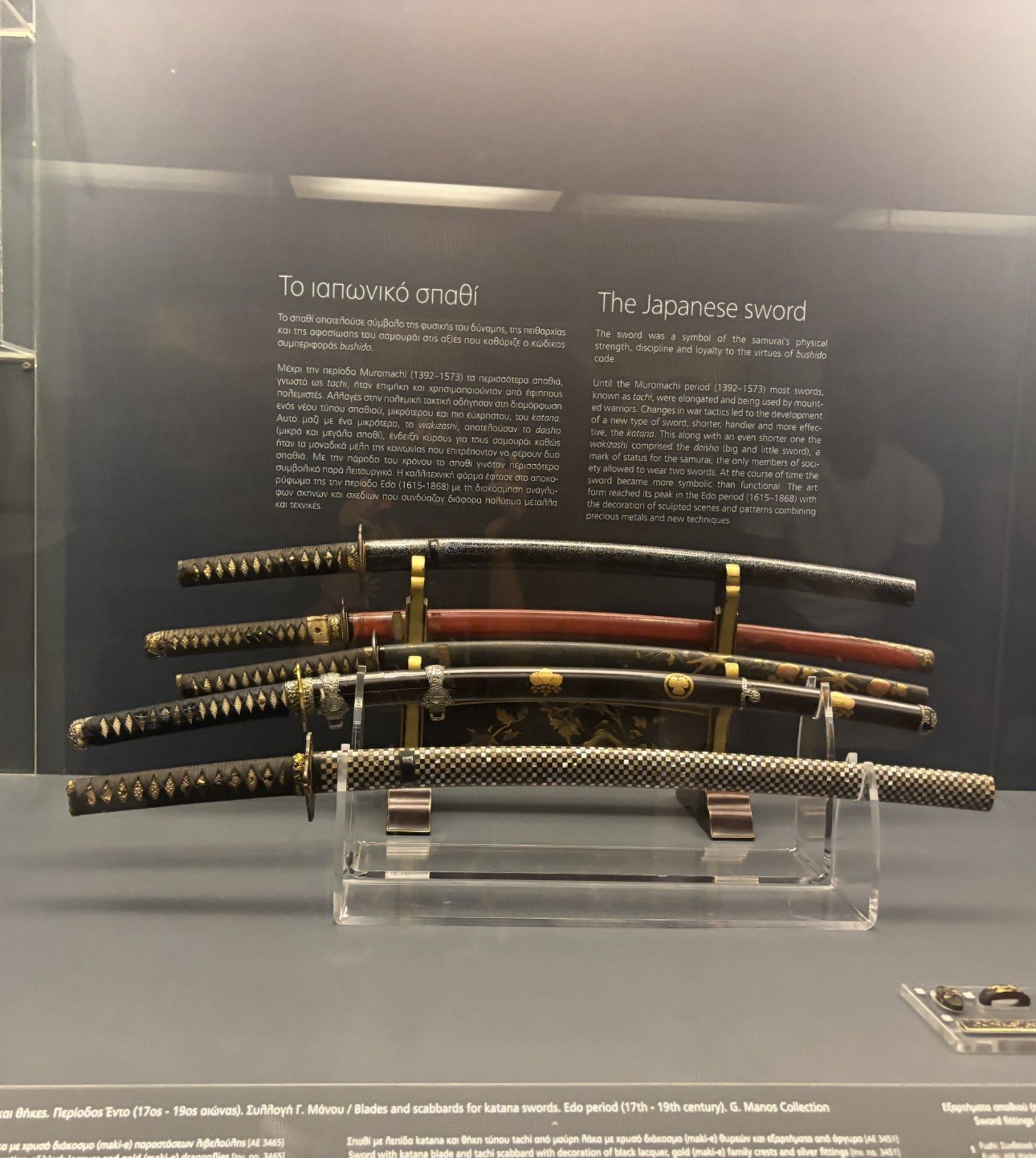
Part of the answer may lie in how the collection was formed. It records not only what Manos chose to acquire, but the routes through which Asian objects became available, desirable and intelligible to European collectors: what reached the auction rooms of Vienna and Paris, how objects were described there, and the categories through which they later entered institutions. Collections can appear geographical long after the circumstances that formed them have disappeared.
Those routes did not give different parts of Asia equal visibility. Japanese art held a particularly powerful position in the late nineteenth-century European imagination and market. Korean objects could circulate through some of the same markets without Korean art acquiring recognition as a distinct field of collecting.
A collection can be exact about its route before it is exact about its geography.
The museum that grew from Manos's gift inherited his objects. Whether it also inherited the categories through which they were understood would take its catalogues and archives to show. What can be seen is the name: the first one made two cultures legible and left a third present but unnamed. It is now the Museum of Asian Art, a title broad enough for the collections added since. Names can change, but structures are slower: a broader title did not, by itself, produce greater specificity.
Museums do more than preserve objects. Through departments, collection categories, galleries, catalogues and labels, they establish relationships between them: they make some traditions visible as coherent fields while allowing others to remain contained within broader classifications. The object itself does not change. The conditions under which it is understood do.
Korea has not been entirely absent from the museum's public programme. In 2007 it mounted Korea Through its Landscapes, twenty-six works lent by Korea University Museum, organised with the Korea Foundation. Yet a temporary exhibition is not a category. For a season Korean art had a name on the museum's walls; it has not become one of the collections the museum presents as its own.
The question in Corfu, then, is not whether Korean art reached Europe. It did, and there it passed into public ownership. It is what happened once it arrived: under whose categories it became intelligible, beside what it was placed, and whether the culture from which it came acquired a name of its own.
Nearly a century after the museum opened, Korean art remains in its holdings without a category of its own among the collections it presents.
Being held is not the same as being named.
— KOUM Partners, London