
In Joonhong Min's studio in Brixton, the earlier work and the later are kept together. A panel built of pen hatching and cut print sits above a surface saturated with colour. Pinned to another wall is a text by Amy Gillies, written for a recent showing of these works. It reads them as a lament. Standing among them, one hears something else.
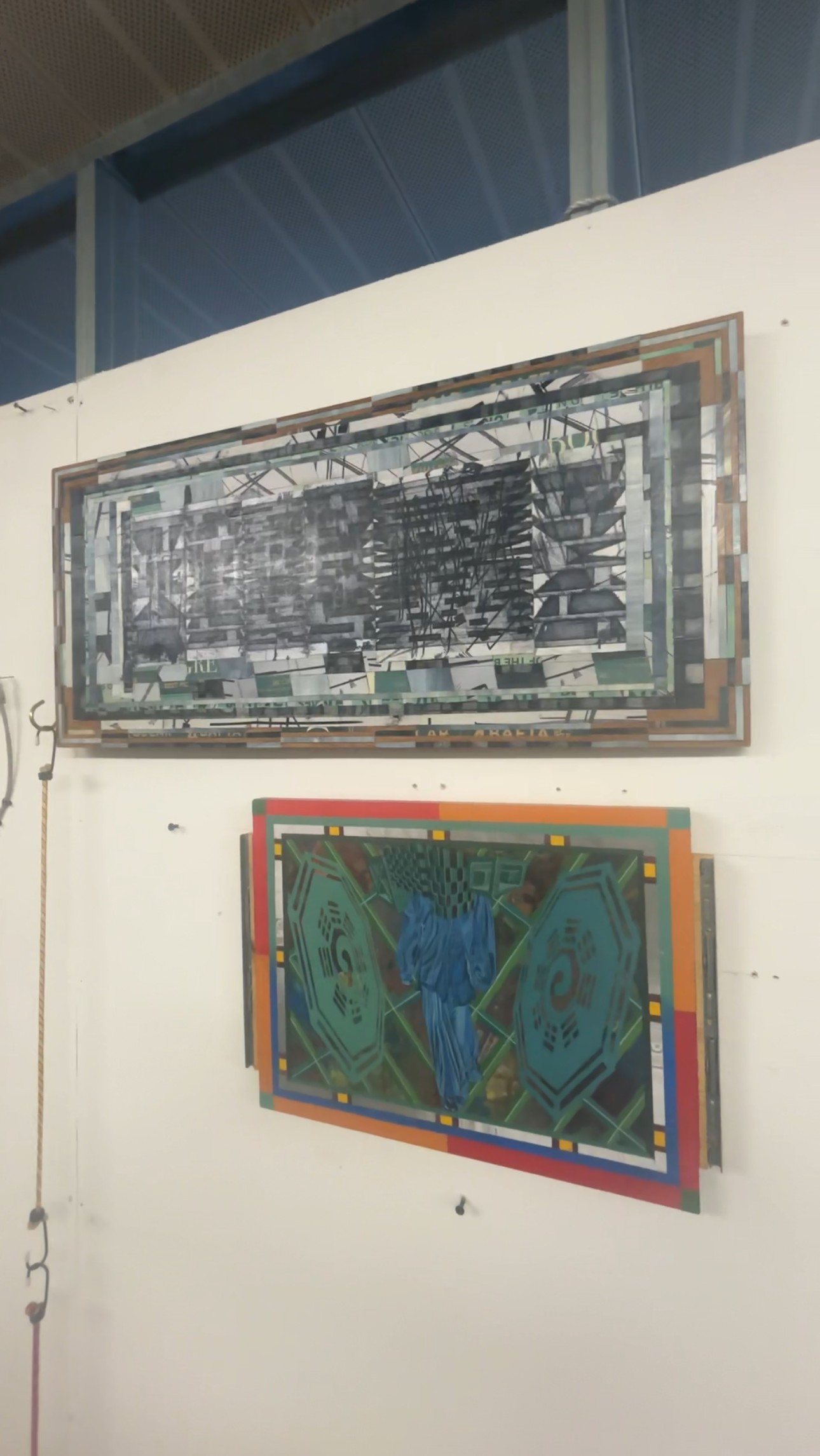
The early surfaces were built of line: architectures raised from dense pen hatching, restrained and largely monochrome, often on wood, with objects gathered from the street worked into them. For his 2018 exhibition at SPACE in Hackney, Future's Present, he drew on things discarded around the borough, and the exhibition text spoke of what is left behind by rapid urban change. Each stroke reads as a small unit of effort, laid down and laid down again. The city it builds is rebuilt by hand.
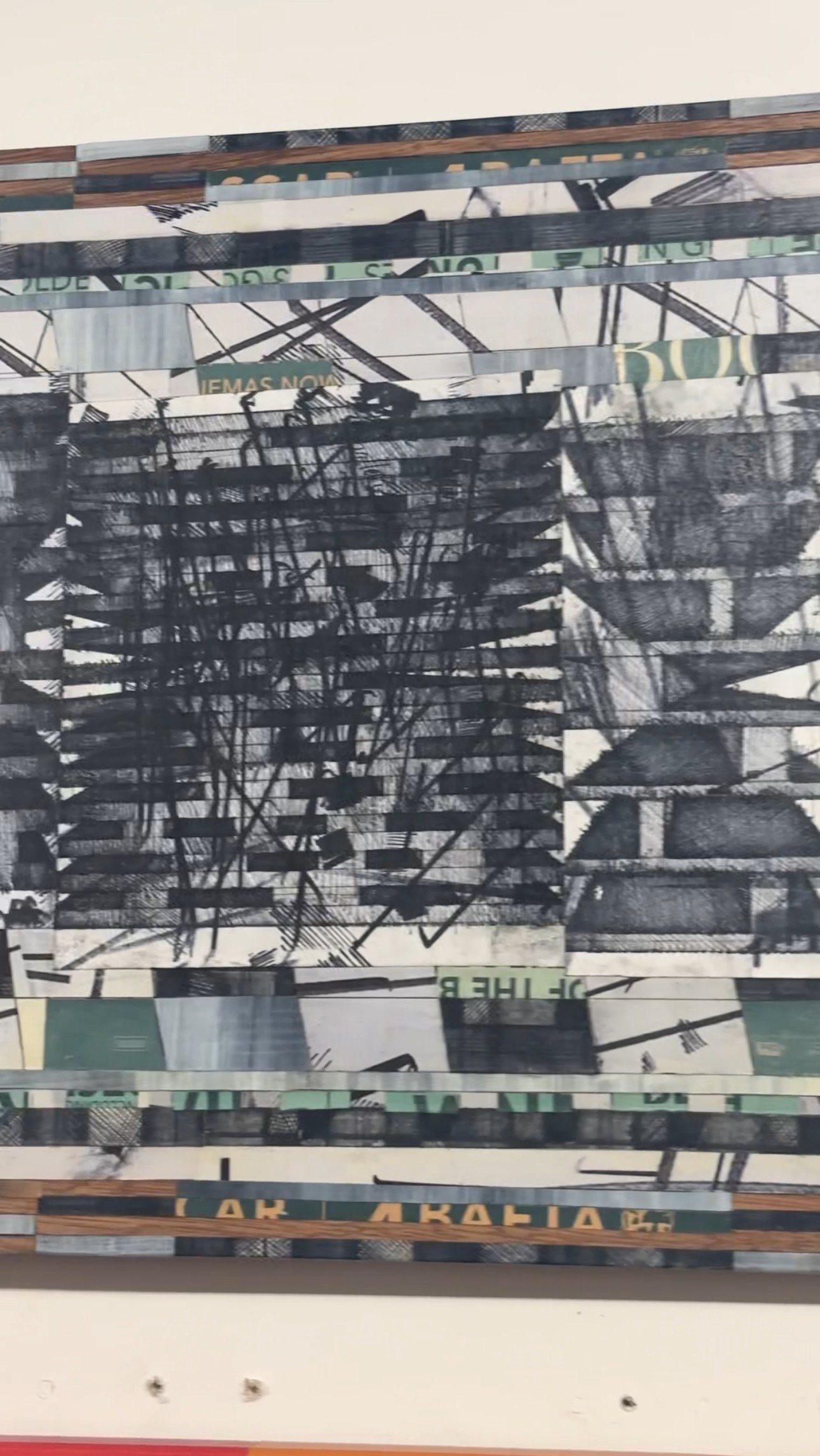
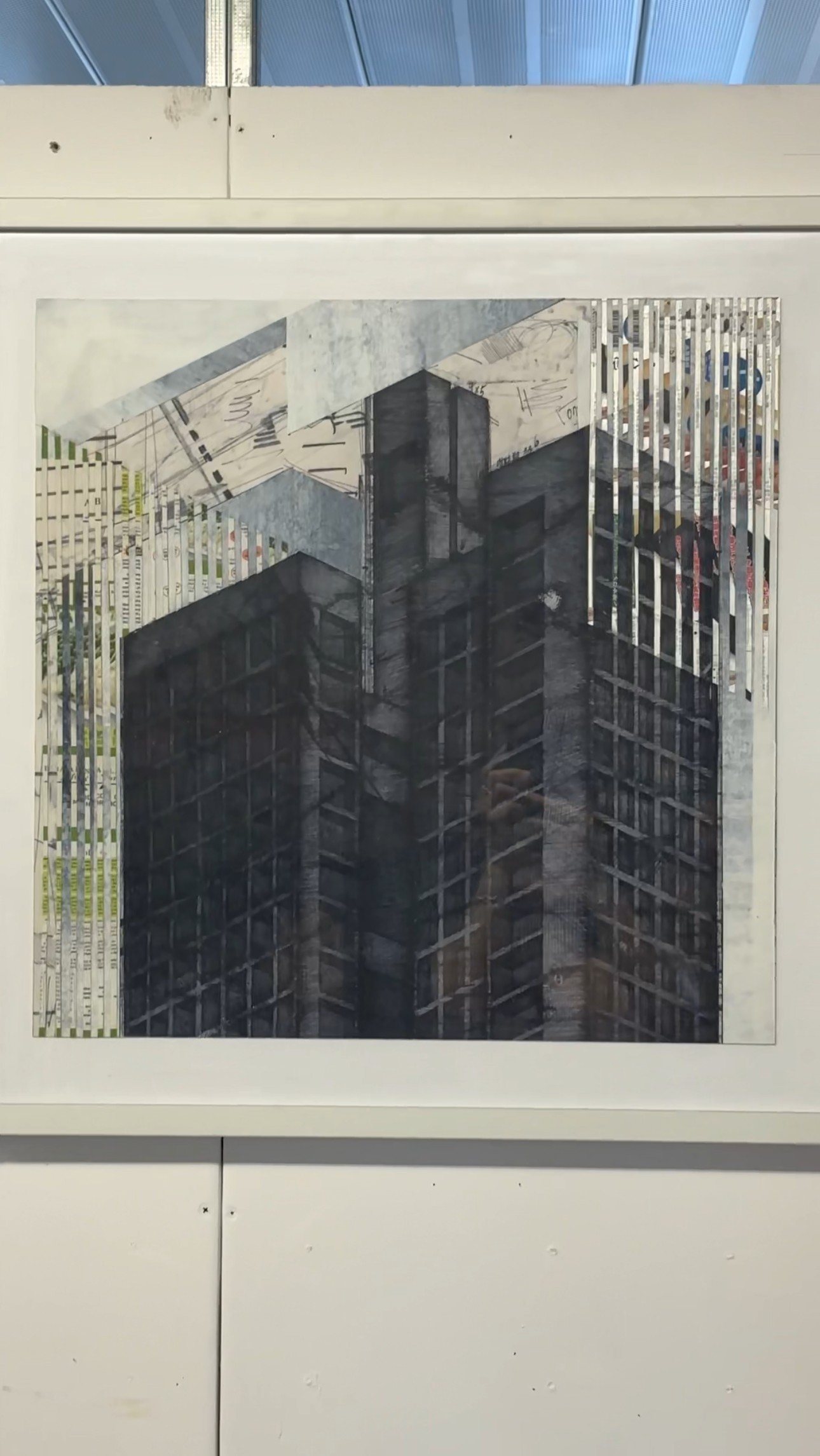
Then the city closed. In the lockdowns of 2020 its functions did not disappear; commodities, crowds and advertisements migrated into a single square screen, and Min's attention followed them. Colour entered. The saturation of the later surfaces is not a matter of taste. It belongs to the subject: the palette of the feed is now the palette of the city.
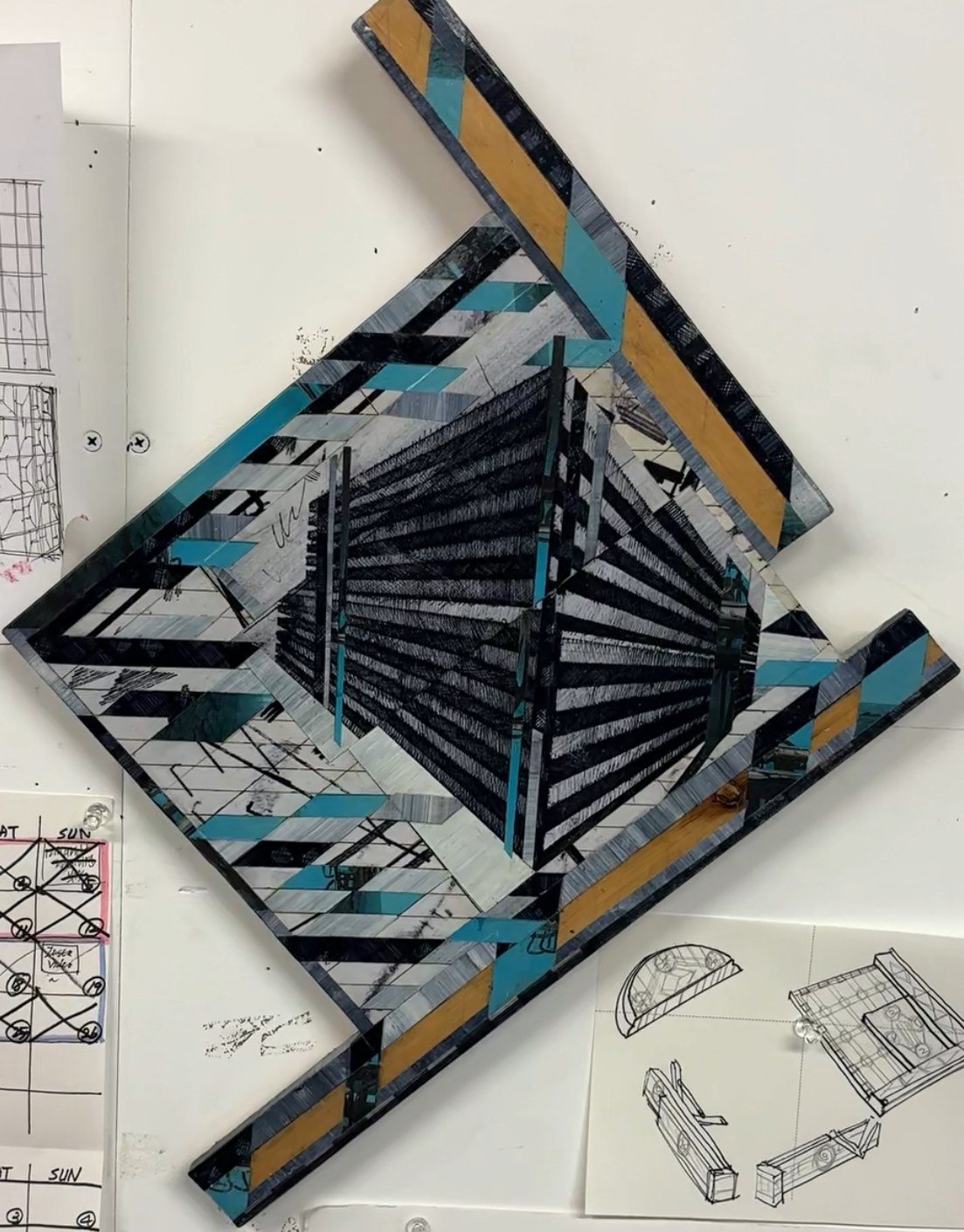
The hand did not leave. The later works are still made in acrylic and pen on wood, and in a shaped panel on the studio wall the hatching runs on beneath bands of turquoise. What changed is where the effort sits. In the early work the labour is the surface; every part of it shows the time it took. In the later work the labour lies under the image, and the image arrives first. Both bodies of work take in the city they describe. Only the earlier one shows what taking it in costs.
Gillies sets the work beside Byung-Chul Han's The Fatigue Society (2010), which, she writes, has been a significant influence on Min's research. Han describes a society worn down not by lack but by excess: depression, anxiety and a culture of overwork produced by too much, not too little. In her reading, Min's practice laments how an overload of information makes us blind to what is happening, until it comes to seem natural and benign. Her text ends on refusal. Min, she writes, remains intent on leaving a record of those who "chose to reject assimilation and try to live in the present instead."
Han's argument cuts closer than lament. The exhausted subject he describes is not oppressed by a master it could resist. It exhausts itself, freely, by saying yes. In such a society refusal is hard to locate, because there is no one outside to refuse. Min does not try to stand outside. He works from inside the present, taking in what it produces, what people desire and display, and what they throw away, and he lets it enter the work without first turning it into an argument.
Korean has a word for what the paintings hold to: geureoham (그러함), the quality of things being as they are. The same sense sits inside the Korean word for nature, jayeon, often glossed as "that which is so of itself." The work does not ask why the present is so. It accepts the present's geureoham. The present is, because its being-so is. Gillies's own sentence ends in an attempt to live in the present. Seen from the studio, that is not a refusal at all. It is the present, received.
The series form a chronicle of that reception. Sleek Altar sets drones and grenades within the stained-glass format of the European cathedral, altarpieces for an age whose faith is technology. In Retinal Chain Reaction, a Haetae guardian, missiles and melting icebergs arrive across a single retina as particles of equal weight. Defaced Vitrine breaks the furniture of display, and Liquid Purgatory asks whether this landscape of consumption has an exit, and withholds the answer. Beneath all of it lie Korean icons dissolved in vivid colour. Min takes in the world's feed without giving up the eyes he was given to see it with.
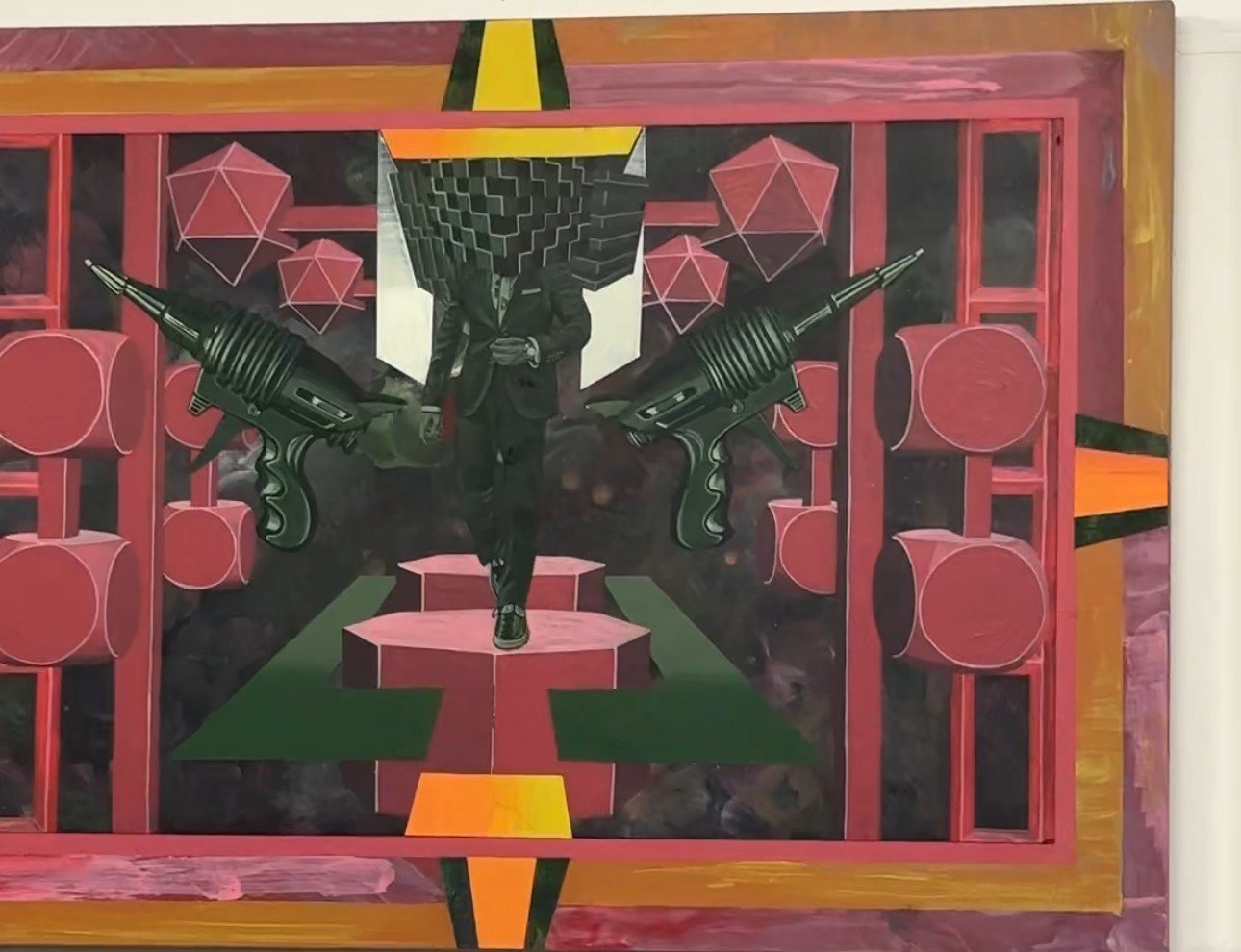
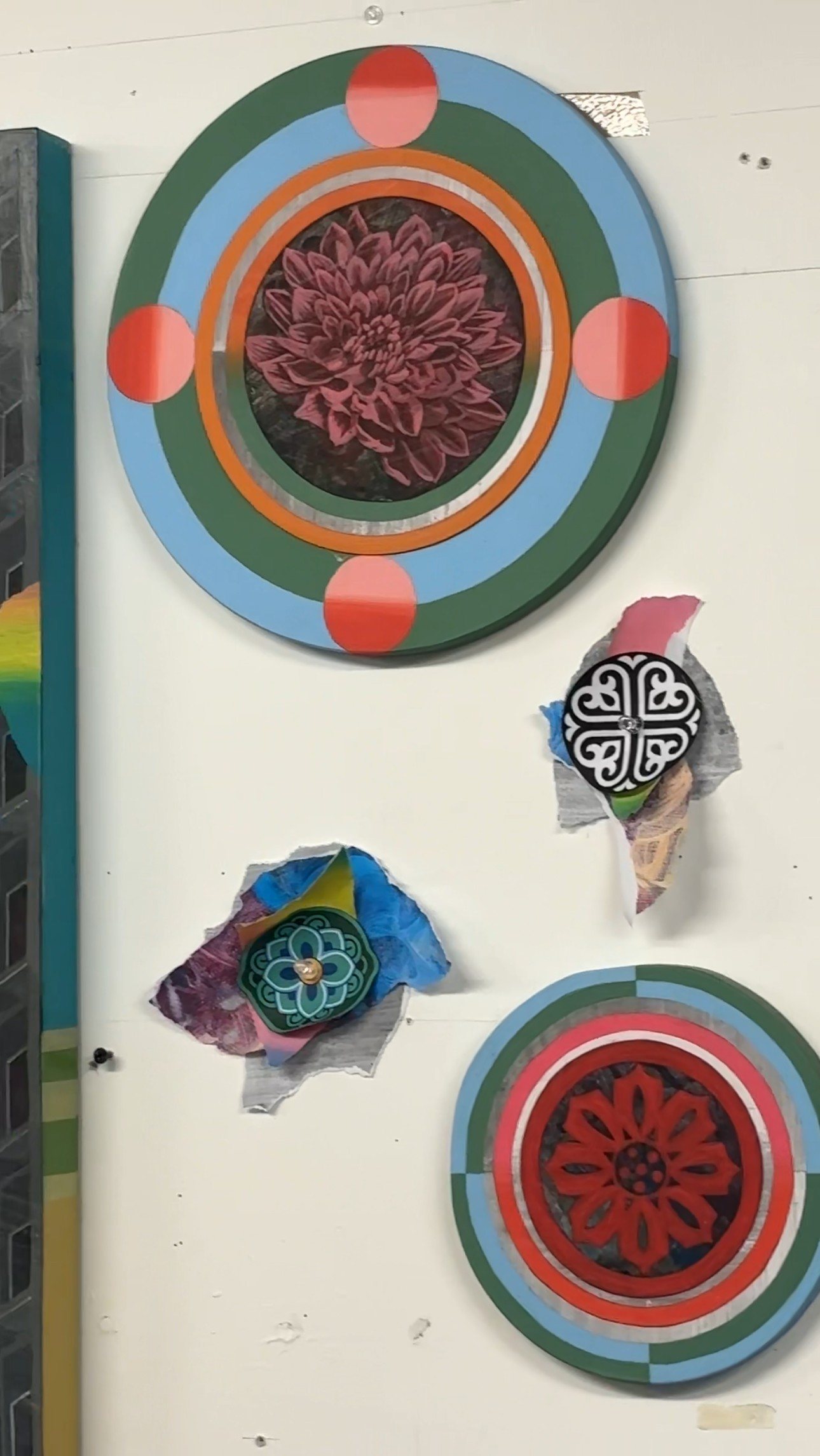
Min has described his work as "a temporary record of the beings who live in the present." Gillies reaches for the same word, record. As generated images displace witnessed ones, a surface made by hand acquires a paradoxical value: a record with an origin, in a flood without one. Temporary is the artist's modesty. A present honestly received becomes, once it has passed, a chronicle.
The work does not tell us what to think about the present. It shows the present as it is, and paints from inside it.
— KOUM Partners, London